Showing posts with label books. Show all posts

Tuesday, June 27, 2017

Essential Summer Reading - The Triple E Framework

I first heard about Liz Kolb's Triple E Framework and the accompanying book in her interview with Vicki Davis. I was intrigued. The more I looked into it, the more I'm convinced this is something every teacher should study over the summer.

What is the Triple E Framework?

At the core, it's a simple idea with just a few important resources. I'll sum it up here and include some links.

As any teacher is aware, adding tech to a lesson doesn't necessarily make it better. It might make it a lot worse. Even if the students are actively using the technology and having a great time completing the lesson, it doesn't mean they're learning the content at a satisfactory level.

Liz Kolb addressed this problem by giving us a list of research-based practices and standards that sum up how to best integrate tech. As you might guess, it's based on three E's:
  • Engage - This is authentic engagement with the learning goal (not just the tech).
  • Enhance - This is about choosing tech that adds value to the learning experience.
  • Extend - And here we look at extending the learning beyond the classroom, to the students' personal lives.
The way Kolb defined those three aspects of learning with tech resonated with me immediately. She was putting into words so many things I witnessed and felt as I worked in dozens of classrooms over the past five years. What I love about her work is that it's clear, practical and backed by research

And she relentlessly emphasizes the learning goal of the lesson over the tech. As obvious as that might sound, we all know that's not always what happens when a teacher or administrator discovers some new tech tool.

All of this can be found in her book, Learning First, Technology Second.  I'll say more about the book below, but the good news is everything is open source and it's freely available on the Triple E Framework website. Here are some key parts you'll want to look at:
  • Overview - This page defines those three E's above, but it also lists the nine questions that teachers should use to guide lesson planning or evaluation. The video on this page provides an excellent summary.
  • Rubric for Lesson Design - This is a simple, free tool that allows a teacher to score a lesson based on how it measures up on the nine questions. Every teacher should use it until they've memorized it!
  • Lesson Planning Template - Here's the same information in a slightly different format for lesson creation.
  • Instructional Strategies - We know any tech tool will only be effective when it's supported with quality teaching. Here are three lists of strategies that can support tech for each of the E's.
  • Case Studies - Here are some examples of putting the Framework into action at various grade levels.

What about the book?

I ordered the Learning First, Technology Second right away because I knew I would want the full story. It didn't disappoint!

It provides a lot more detail that what you'll find on the website. Several examples illustrate exactly how the rubric should be used to effectively evaluate a lesson. There are also many more examples of quality lessons in the book.

I most appreciated the chapter on effective instructional strategies that support good use of technology. Rather than just listing them like they are on the above website, the book explains a number of important ones for each of the three E's.

I read the book quickly, but I'll return to it many times for these examples and lists.

Here are a few things that stood out for me:
  • For true engagement, students need a social aspect. Try to leave room for "co-use", either between students or between the student and teacher, when tech is being used in the lesson. That means two students on one device might be better than 1-to-1 and some conversation about the learning goal should be happening as they use the tool.
  • Up to 70% of apps that are promoted as educational have no research behind them to support the claim. We can't assume the tech alone is accomplishing anything as far as real learning. Teachers must be sure instructional strategies are in place when the students are using the tools.
  • Every lesson doesn't need to score high on all three E's. What matters most is that a teacher naturally begins to evaluate tech use in light of the Framework and looks for opportunities to improve in each area.
My only regret about the book is the title. I think it might make it too easy to dismiss. After exclaiming about how much I love the Triple E Framework, I showed the book to another instructional tech and he was less than impressed. Looking at the title, he said, "Yeah, but we all always say that." 

I agree that the heart of the Triple E Framework is to make the learning goal first priority, not the tech. I just hope educators will not stop, thinking they'll find nothing new. The wealth of practical ideas in the book is well worth exploring, even for those of us who have been proclaiming, "Learning first, tech second," for years.

Friday, November 29, 2013

8 Books That Changed My Work in Education

This school year I have been enjoying the best work of my career.

My job change from high school math teacher to an evolving position of K-12 Instructional Technology Coordinator has been a rewarding time for me. I have been excited to explore more creative opportunities in and out of the classroom, with students and adults. I am more inspired and I get to pass that along to other teachers and students who express gratitude for my work.

In this time of transition I've learned so much from the great educators and others that I have met, but I also gained much from books I have read.  The ones that impacted me the most are not the ones I usually see mentioned by other teachers.

So here's the list of eight books that came along at the perfect time for me. They made a significant difference in how I see education, others or myself. Each link for the title is to a page on Amazon.com for an edition of the book.

Disrupting Class - Though a lot of the points are now easily observed, this book opened my eyes to how technology makes things fit. In particular, it describes how online learning can allow us to reach every learner at the point he or she needs to learn. It gave me a vision and a sense of urgency for what I could accomplish for students. One of the co-authors created Sophia, an online learning portal patterned after the model envisioned in the book.

What Video Games Have to Teach Us About Literacy and Learning - I read this book as one of the final courses in my graduate program. The author fascinated me by expanding my view of literacy. Some of his Learning Principles still influence my work on a regular basis. My final project for the class was praised by my professor and I was greatly encouraged that I was onto something important.

Searching for God Knows What - This book, from Christian author Donald Miller, probably doesn't seem to fit well with the others. Among other things, it deals with our tendency to see life as a competition when it's really about fostering relationships. I read it the summer before I started working in all buildings across my district. I can't imagine a better book for preparing me.for meeting so many new colleagues and having to lead them. If you're not opposed to writing from a distinctly Christian perspective, I strongly recommend this book as Miller's best. It impacted my thinking in ways beyond the scope of this post.

Steal Like an Artist - This is a quick read and I love coming back to it from time to time. Probably the most important lessons for me are presented as well in other books below. Still, this one excited me about art. In relating to the author on a few points, it helped me see myself better as an artist and writer. The premise of writing advice to oneself is also a fascinating idea.

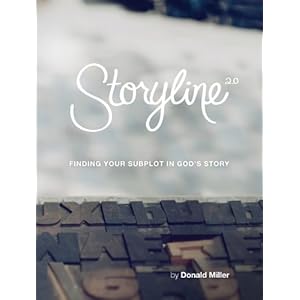
Storyline - Here's another one from Donald Miller. This is a short book based on his Storyline conferences. It is also more of a workbook, guiding the reader through the process of viewing his or her life in terms of a story. It was a painful experience to work through this, in all honesty, but the end result proved to be healing. This, along with the next three books, really opened the door for personal expression and art in my work. As promised, it did clarify my vision and purpose. Here's my post about the book and my plans for classroom activities based on the idea of viewing our lives as stories. I also created this game as an introduction for a class.

The Freedom Writers Diary - I read a lot about Erin Gruell and watched several videos online about her work. I don't remember whether it was really this book that made the difference or if it was just her story. Still, it's a good place to start. It reminded me of the importance of tying the content to the students' lives through personal, reflective writing. I can attest that students do generally enjoy it. Not only does it bring the class content to life, but it helps them find a voice and a place in their world.

Poke the Box - I read this short book in the summer of 2012 and I can't believe how it recharged my enthusiasm. The subtitle asks when was the last time you did something for the first time? I got hooked on trying new things and I'm indebted to Seth Godin for life for the learning experiences.

The Icarus Deception - I won this one (also from Seth Godin) on Jeremy Statton's blog. There were stretches of the book that I found hard to get through and I almost didn't finish it at one point.  I'm glad I did because Godin's big picture definition of art and artists helped me find words for what I was discovering in the classroom.  You can see its influences in my posts about engaging students through meaningful contributions and the opportunities technology and connections bring us now (not just years down the road in a career).

Monday, February 11, 2013

The Lifelong Learner Challenge

I've been inspired by Seth Godin's book, Poke the Box.  I am also enjoying much of what I'm finding in The Icarus Deception.  (I won a copy from Jeremy Statton's blog, Living Better Stories.)

In both books Godin repeatedly challenges the reader to get started, to make things and to keep getting better at making them.  I've been encouraged by the results as I try to put it into practice.  I share the ideas with teachers in the district where I work and I try to incorporate it into the lessons and presentations when I get a chance to teach or speak in the classroom.

I was thinking today of a Lifelong Learner Challenge based on some of the principles of the books.  I'd like to do this as a personal goal and to encourage (or require!) my students to do it is well.

The Lifelong Learner Challenge

Each week I will make at least one thing that is:
  • New - It must be new to me and to the world--original.
  • Good - It must be measured against a realistic, high standard.  (For students, this includes appropriate content standards.)
  • Personal - Those who know me can see me--my style, unique preferences or personal experiences--in the work in some way.
  • Helpful - It must be presented or published in some way so others can find it and benefit from it.

This challenge is currently a draft.  Once I am happy with it and practicing it I will put it on my Passion and Vision page.

If you do something similar or have suggestions I would love to hear them.

My list is inspired from Seth Godin's very challenging list in The Icarus Deception:


Six Daily Habits for Artists

  • Sit alone; sit quietly.
  • Learn something new without any apparent practical benefit.
  • Ask individuals for bold feedback; ignore what you hear from the crowd.
  • Spend time encouraging other artists.
  • Teach, with the intent of making change.
  • Ship something that you created.

Tuesday, January 22, 2013

Helping Students Live Better Stories - A review and thoughts for lessons based on Donald Miller's Storyline

I can’t say enough good about Storyline by Donald Miller.  It's not too much to say it has been life changing and I am working on ways to integrate the principles with classroom activities.  

I’ll elaborate on the book, in the way of a review, before addressing those activities at the end of this post.

I've been a fan of Donald Miller's books for about four years now.  I started with Blue Like Jazz since that was the one everyone was talking about.  It was Searching for God Knows What that really caught my attention, though.  I read it the summer before a job change pulled me from the high school classroom and I found myself working with professionals at all levels in the school district.  The book was very timely and it changed the way I saw the purpose of my work.

Our Lives as Stories

Recently one of the themes of Miller's writing has been that the things that make great stories also make for more meaningful lives.  He tells how he came upon those truths in A Million Miles in a Thousand Years.  That book was a birthday gift the year I turned forty.  Once again his thoughts were timely.  I read it again a few months ago and I found it even more helpful the second time through.

Miller started doing Storyline conferences a couple years ago.  Over the course of a few days attendees work through a process of viewing their lives as part of a larger story.  He also draws heavily from Viktor Frankl's logotherapy--a "therapeutic process" based on the idea that humans are not so much seeking pleasure or power, but meaning.  

As for the power of stories, there’s nothing terribly fresh there.  From our PowerPoint presentations to our company websites, we have been told that a strong story speaks to the heart.  But the beauty of Storyline is how Miller combines the essence of a great story (a character who wants something and overcomes obstacles to get it) and this idea that we can find meaning in suffering into a simple process that infuses those potent ideas into one’s daily choices.  

Much of Miller’s other writing actually speaks against any X-step process for self-help, so I don’t want to make this sound easy to actually live out.  It’s not.  It is easy to see the truth he is onto, though, and I will personally attest to it's potential for making vital change..

The Book

Near the end of 2012 Storyline was published as a stand alone workbook for the process he presented at the conferences.  The book was, again,a gift for my birthday.  Even with all the space for recording the exercises it is a short book of less than 100 pages, but it took about six weeks for me to read it through.  I still have not completed all the exercises even as a draft yet, but I have made enough progress to greatly appreciate the message he’s telling.

It bears mentioning that Miller's writing is always unashamedly Christian.  When he talks about finding your story in the scheme of God’s larger story he refers repeatedly to the Bible.  That might turn some away, but his good intentions are always clear.  From his books to his blog and his speaking (and even his film), I've never heard anyone outside of the faith accuse him of being offensive in his approach.  I'm sure people of all faiths and even those who would claim none have found some benefit to the ideas he presents in the Storyline book and conferences.

The Storyline process starts by reflecting on the positive and negative turns throughout one’s life.  These are the events that forever changed the way the reader sees himself or life.  From there the task is to identify a life theme which encompasses where one fits in the overall story.  According to Miller, we all fit in God’s story of saving many lives.  For example, my own theme (which will likely be rephrased over time) is “always teaching, always learning”.  (It took about two minutes to realize if I'm going to do anything important it will have to happen through my work in education. I remain hopeful.)

It is the next step that I found most helpful so far.  Drawing from logotherapy, the reader is encouraged to find ways in which God can redeem the negative turns in life by working through them to help others.  This is a deeply personal affair beyond the scope of my usual work on this blog, but the activities opened my eyes in ways nothing else has. I have found and been motivated by a renewed sense of purpose in the weeks since I have started working through the book.

In the remaining chapters we get back to what makes a better story also makes a better life.  Roles are identified (spiritual being, parent, co-worker, etc.) and within each of those roles the reader makes some clear plans.  This is all phrased within the concept of story--ambitions, inciting incidents and climatic scenes.  While I have only finished a few stages of this for a couple of my identified roles, I love the approach.  As Miller claims, the process leads to clarity and there is a deep sense of satisfaction in taking steps toward those climactic scenes.

Besides just the book and the conference there is a website devoted to the process-MySubplot.com.  Users can create an account there and track their stories with the simple organizational tools.  Some social network features also allow for comments and sharing if one chooses to make their profile public.

After finishing the book and seeing the benefit of the exercises I bought copies for a few family members. My wife is working through the book now too and, while it can be painful at times, she agrees it is a valuable experience.  

Plans for the Classroom

Another teacher, a friend of my parents, found the book at their house while we were visiting.  Having devoted much of his life to middle school students through P.E. and English classes and his passion of coaching wrestling, he was amazed by the content of Storyline.  Page after page he was taken back at how Miller was putting into words the things he felt for decades.  

That experience confirmed my plans for me the need to develop some classroom activities based on the book.  It will take more time than I’d like to try this out because I do not have my own classes.  As with most of my work, I have to wait until I find another teacher who is able to fit my ideas into her plans.  Just last week I arranged something (at some unspecified time in the future) with a middle school Language Arts teacher.  She sees the value of my ideas in terms of educational standards we can cover, but she also knows it goes beyond subject matter and test scores.  It’s about reaching young people.  

She already planned to do a journal project along the lines of Erin Gruwell’s work with The Freedom Writers Foundation.  We agreed it should be easy to to integrate the Storyline concepts within that and I am very excited to see where it leads.

Obviously, since I work in the public schools I plan to rephrase a lot of the Storyline content so that it doesn’t sound like I'm teaching Sunday school.  In the past when I work in classes that involve personal reflection or lessons about success it has been my practice to make it clear students can express their religious beliefs or matters of faith.  I don't require this of course, but at the same time it seems like a shame to leave a vital part of the human experience out of the picture.  From what I’ve seen in their work, many have been grateful for the opportunity to openly express themselves. 


(Almost all students have been positive about my sometimes deeply introspective assignments.  I’ve received many thanks from some for the work I’ve done.  I find it’s still hard for me to reach those guys coming from Auto Mechanics at the Skill Center, though.  I get no hate from them, but I have accepted we come at life from very different paths.)

As for the classroom activiites, here is the basic outline of what I want to cover in the classroom:

  • What makes a good story? - Through discussion and other activities, we’ll determine which elements are present in the most popular books and movies.
  • Viewing our lives as stories, what would be the theme?  - I will probably bring in the Three Movie Exercise (See step 2 of this blog post.) I often use when we talk about our passions.
  • If our stories are about helping others, who do we think we could help?  - Here is where I want to bring out the idea of finding a redemptive purpose in our suffering.  I plan to talk about logotherapy to some extent and it is here that we can tie in the Freedom Writers and Anne Frank’s story.
  • What are our ambitions and what steps can we take to realize them? - Students will set goals, some of which they can achieve by the end of the school year.  
  • How can we tell our stories? - I’m most excited about how we will use blogs, podcasts and video to present the results of our work so others can be inspired to do the same.

From the educational standpoint, the reading, writing and presentation skills involved in each stage will be very beneficial.  We’ll have no trouble covering the bases as far as content standards go.  I’m also confident that students will be motivated to complete the work simply because it connects with their lives in a way that most school work does not.  And beyond our own classroom, as we perfect the project I look forward to presenting results that can inspire other students and teachers.

Obviously this is just a plan at this point, but it’s probably also apparent it is part of my own exercise in the Storyline process.  I am very grateful for Miller’s work with Storyline as it has opened my eyes to a potential blending of my work with technology, education and my passion to help others reach their potential.  I will continue to mark my progress here as I see the results.

Sunday, October 21, 2012

For the First Time - Starting something new with the power of technology

I was inspired when I read Seth Godin's book Poke the Box last summer.  This past week I assigned a journal project to the high school students in a Digital Media class that I work with.

I encouraged them to reflect on some things they did for the first time in 2012.  Going beyond just the message of the book, I also asked them to evaluate the items on their list of "first times".  The assignment then ended with some goal setting.

To tie this into technology, I firmly believe the tools that allow us to connect with others nearby and around the world require us to start big things that make a positive difference in the lives of others.

A high school technology course should not be about the technology, but how the technology can help the students achieve their potential. 

If you're interested in the presentation and assignment:

First I spoke to the class about the book and some examples from my own life.  Here is a recording of that talk that I made later.  It's about 4.5 minutes long.


Then I showed them the video about Caine's Arcade.  This a great example of people starting something new.  I make sure students consider the action of the filmmaker in this story.  He is really the one who "poked the box" by seizing an opportunity that grew into something powerful.  Students can appreciate something that gets over three million views on YouTube and results in a scholarship for a young boy.


And finally, here's the journal assignment that I gave to the students.  I was very pleased with the response the class gave to the presentation, the video and the journal assignment.

Wednesday, May 23, 2012

Sophia.org - Online Lessons for flipped teaching or just learning on your own

I was surprised that no one at a recent flipped teaching workshop had heard of Sophia.org.  I came across the site at least a year ago and I've put a few lessons there myself.  I hope to do more in the weeks ahead.

Sophia is a combination of a social network and a lesson repository.  The learning "packets" are categorized and rated by users, so ideally you'd be able to search for any topic and find a variety lessons for it.

I suggest any teachers who are flipping their classroom should put their lessons on Sophia in addition to where they post them for their classes.  It could be a great place to develop a following or to get feedback from other teachers and learners.

My few tutorials are posted on this page at the site.  I tried to break free from the very academic lessons I was finding by posting my lessons from here on how to make games.

When I first stumbled on Sophia I thought it sounded exactly like the vision of learning described in Disrupting Class.  I loved the book and was excited to see the predictions in it coming to life.  I soon learned it was created by one of the authors of that book, making it a little less surprising.  I have remained hopeful nonetheless.  (Though I'm never motivated by accumulating little icons.)  The fact that no one had heard of it at the workshop wasn't encouraging, but I still think it has potential and I will continue to support it.

Check it out first by searching for something you'd like to learn.  I would love to hear if you find it useful.  Next, think of how you could present your favorite thing to teach.

Wednesday, April 4, 2012

Great Advice for the Creative Life

I have been reading Steal Like an Artist by Austin Kleon.  It's filled with some great advice for students growing up in today's information saturated society.

When I first wrote this short post about Austin Kleon's book I had no idea how many people find my blog through it.

If you're not a teacher but you came across this blog, please consider passing the link along to someone you know in education.  Ideas can change the world and even the simplest ideas and acts can change a life.

See my pages about creativity games in the classroom or my vision for education.  If you know someone who might find them useful, please send them the links!  

 This image has been all too true of my own work, except for that low point at the bottom.  For me it never seems like just a single point!